24.6 C
Monrovia
Thursday, July 2, 2026
Home Tags Golden Trip Group Limited

Tag: Golden Trip Group Limited

Gold Mines Turn Unknown Miners’ Graveyards

Mining victims' graves
The graves of three miners in Massawo, Lofa County

Top: The graves of three miners only identified as Bassa Boy, Timiya and Tamba on Success Camp in Massawo Town, Lofa County. The DayLight/Samuel Jabba


By T. Prince Mulbah


SUCCESS CAMP – In November 2024, a man, only identified as Mackey Boy or Bassa Boy, drowned in a mining pit in a forest in Lofa County. Bassa Boy, in his mid-30s, disappeared in an abandoned mining pit on that fateful Saturday morning.

A search party found his lifeless body the next day in Success Camp, a goldfield in Massawo Town in Lofa County’s Zorzor District. Eyewitnesses—fellow miners and townspeople—said the doomed miner was moving gravel a mining company had piled up when he met his death. He was buried the following day.

Bassa Boy is one of several unidentified miners who died in mining pits abandoned by an illegal operation conducted by J.M. Mining Incorporated, a Chinese-Liberian company, and were buried in the mines they dug. J.M. Mining had operated the mine for nearly a year after its license had expired.

The Ministry of Mines and Energy records show that J.M. Mining’s gold prospecting license was issued in May 2022 and expired in November 2023. However, the company continued to operate up to September 2024. That same year, the EPA fined it US$95,000 for operating without a permit in Gbarpolu County.

“J.M. Mining’s ugly work they did here is killing people’s children,” said  Junior Wolewu, Massawo’s Town Chief. “We don’t have any information about their families.”

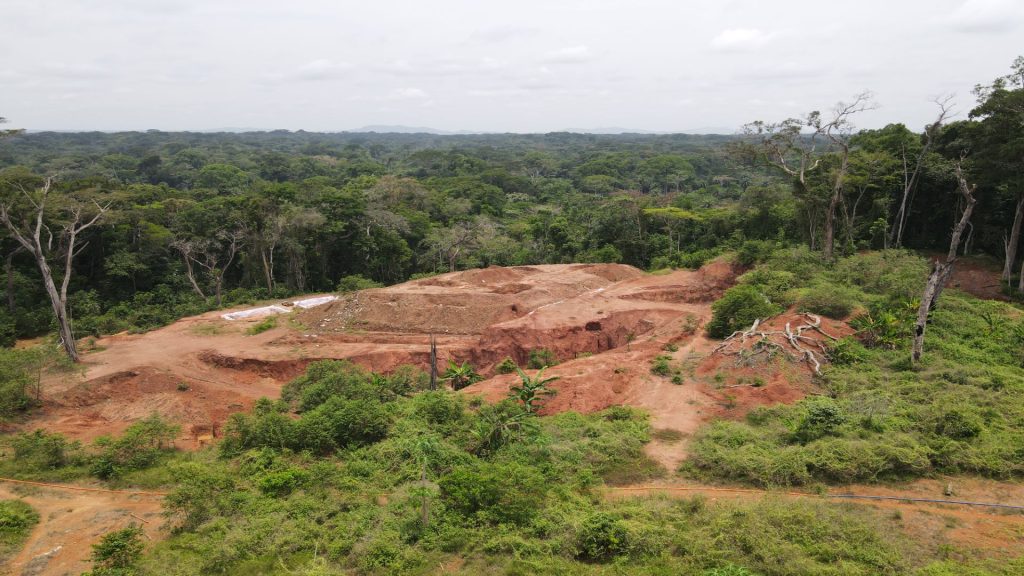
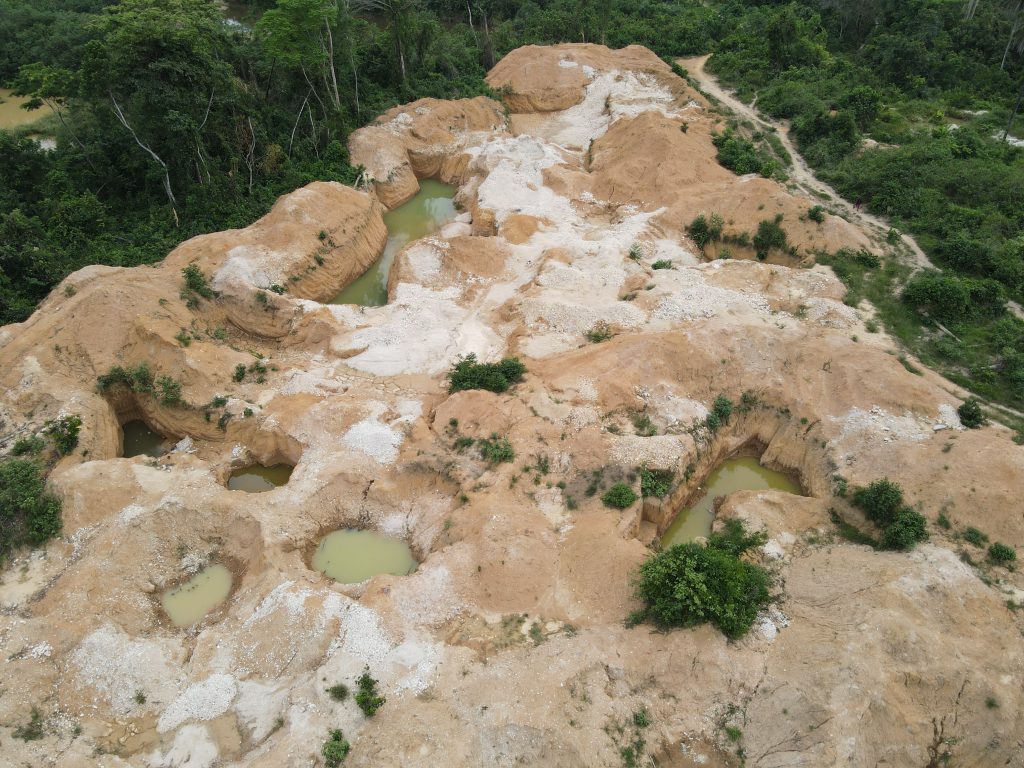
Reporters documented several holes J.M. Mining Company dug and failed to refill.  The once-thick, forested area has been transformed into a hollow-out wasteland of open, giant-sized pits.

‘People really cried’

Bassa Boy’s grave lies a few minutes’ walk away from the pit in which his life ended. Next to his grave are those of two miners, only identified as Tamba and Timaya. The three were unlicensed miners, or “gold boys,” who followed abandoned mining trails.  Gold boys either utilize abandoned pits or dig their own, in a relentless hunt for gold. Like rogue companies, they are responsible for degrading the landscape of the countryside and polluting watercourses that communities use for drinking.
DJI 0219
Abandoned mining pits on Success Camp in Massawo Town, Lofa County, where several miners died. The DayLight/Samuel Jabba

Short, bright in complexion, and 30-something, Bassa Boy arrived at Success Camp a few years ago. He always wore a beanie like the ones sported by the late American singer-songwriter Marvin Gaye.

“I was not here that Saturday. When I came, they informed me that he had left in the water. People really cried, including me,” recalled Agnes Gibson, a townsperson.

The grave next to Bassa Boy’s is the final resting place of a miner who went by the alias Timaya. Nicknamed after the popular Nigerian Afrobeat star Timaya, he was an average-height young man. One evening, while he and two others were working, he fell into a pit. His friends sought help but were unsuccessful and watched painfully as he drowned.

The third victim, Tamba, a black and tall man who also repaired mining equipment at Success Camp, died late last year. A pile of loose gravel had fallen on him while operating an earthmover. He had his residence in Massawo Town and was a regular “gold boy” contractor between mines, townspeople said.

“All the gold boys don’t stay long in one place. They can come to hustle and go at any time,” Gibson said.

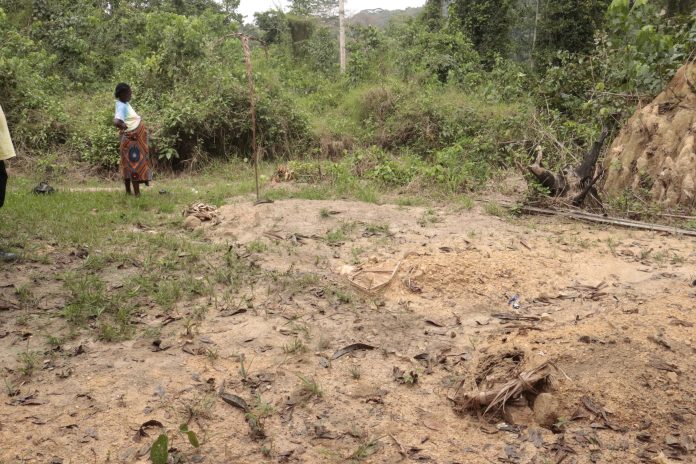
Reporters witnessed firsthand victims’ graves with red earth piled over them. No stones were placed around the graves, like in the traditional rural way. Only wreaths made of palm leaves and sawgrass were placed at the head of the graves.

Massawo locals are sympathetic towards the strangers who came to make ends meet and ended up being buried here. In rural communities, drowning and other natural accidents are believed to be a bad omen, even worse with unnamed victims. To vanquish the misfortune, they are buried outside regular graveyards.

“All three of them, nobody has seen any of their families since they died. When they (miners) come here, they don’t call their real names, so it is difficult for their families to know when they died, Gibson told reporters at the gravesite.  

“We feel bad,” she added.

Reporters documented another graveyard on Success Camp, which hosts a lone grave. It is the final resting place of a miner only identified as Prince. It lies about a 15-minute walk from the graveyard, where Bassa Boy, Timaya, and Tamba were buried.
IMG 7608
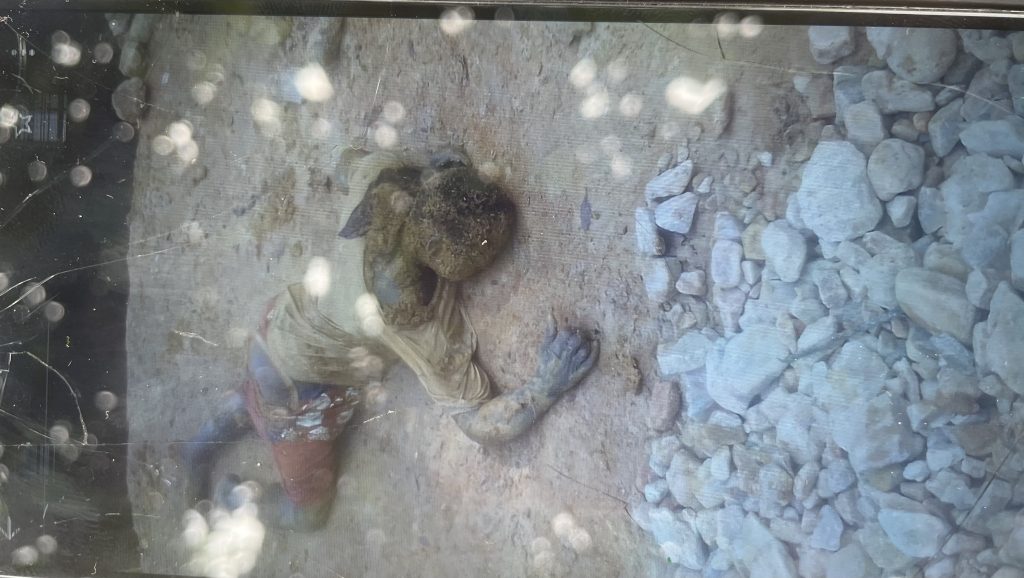
The body of an unfortunate miner, only identified as Prince after it was recovered from a mining pit in Massawo, Lofa County. Picture credit: Town Chief Junior Wolewu

Prince met his death due to a mining accident on this New Year’s Eve. Dirt fell into a pit he was digging at night, killing him.  The deceased’s friend, who was the only other person there, was unable to rescue him. The sheer depth of the pit and the weight of the gravel overwhelmed the one-man rescue party, according to Wolewu.

“A 15-man jury examined his body, and police came from Salayea to see the body. From there, we buried him in the same mine,” added Wolewu. Pictures captured by townspeople, The DayLight obtained, show the unfortunate Prince lying on a makeshift, wooden stretcher just before his burial.  

Papay Kpannah, the fifth—and only identified—miner, died in 2021 or 2022 elsewhere in Kpeteyea Town, Salayea District, where Golden Trip Group Limited, another company owned by Randy Scott, operated. Kpannah was a citizen of Kpeteyea but spent almost all his life in Monrovia. He had returned home in search of a job. His grave lies on the outskirts of Kpetayea, at the edge of a cocoa farm, marked with a stone circle.

Golden Trip was established in April 2018, with 75 percent shares for  Chinese national Chein Haibin and the rest for Scott. It started operations in Kpeteyea by May 2020. In 2024, the Ministry of Mines and Energy placed its license on hold and later canceled it for noncompliance, about two years after Kpannah’s death.   

Like the other victims, dirt from the top of a Golden Trip pit in which he was working fell on Kpannah. George Vesselee, the late Kpannah’s relative, said there were excavator bucket impressions on his body. It was unclear whether the machine operator tried to rescue him.

“He was working with the Chinese man that Golden Trip assigned to the excavator. What we heard was they were only two—he and the excavator operator. When the excavator removed the dirt, there was a piece of rock he went to pick… and the dirt… fell on him,” narrated Vesselee.

“When I received the information [of the accident], I came in and saw that he was still alive. They tried rushing him to the hospital, but he died along the road between Gorlu and Gbongay Town,” added Vesselee.

Failure to restore the land

The Liberian Minerals and Mining Law requires miners to restore the disturbed environment after operations. It calls for miners to report deaths and injuries, consistent with the Decent Work Act.

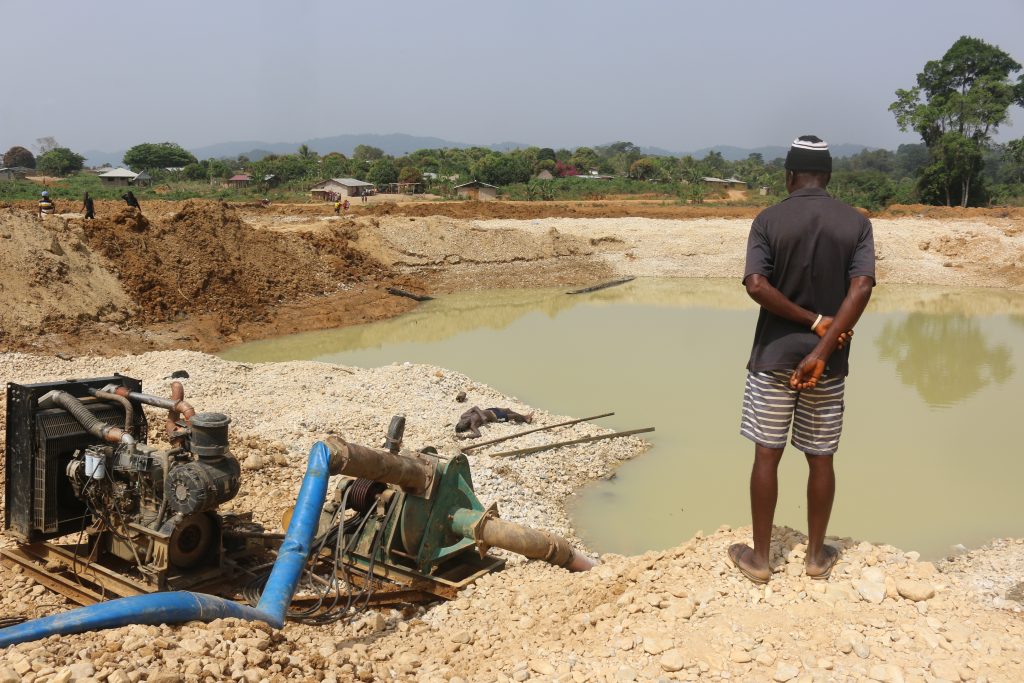
However, that provision is not being enforced, leading to deaths from mines countrywide.  In 2019, about 40 miners were buried alive in Tappita, Nimba County, in the worst mining accident in postwar Liberia. In 2024, several miners died in a mine collapse in River Cess County. Earlier that year, a mineworker drowned in an open pit in Belle Yalla, Gbarpolu County.
IMG 4480
In 2024, a mineworker drowned in an abandoned mining pit in Belle Yalla, Gbarpolu County. The DayLight/James Harding Giahyue

Scott denies that miners died on any of his companies’ gold mines.

“It is not to my knowledge. Nobody died in the mine,” Scott told The DayLight in a phone interview. “You know how many years nobody worked down there? You know when we left that place? How will you be asking about three years ago?”

“Why will you blame me for something I know nothing about? I don’t know about holes, pits, or whatever you call them. I was the manager of J.M. Mining, and I don’t even know how that contract ended with the Massawo people, so I can’t take the blame for people’s deaths in the gold mine,” added Scott.

He also dismisses evidence that his companies abandoned mining pits in which four of the five miners died. He said his companies could not dig pits while they were working on mountains.

“Who can cover a mountain?” Scott asked rhetorically. “Is a mountain a hole?”

Though both Massawo and Kpeteyea are hilly communities, the videos and pictures reporters captured show large holes in the areas where J.M. Mining and Golden Trip operated. Some of the pits measure over 12 feet deep, with a network of pipes supplying water from a nearby river to the hilly mines.


[Samuel Jabba contributed to this story]

This content is produced by DayLight with support from the Embassy of Ireland through Integrity Watch Liberia. The DayLight maintained editorial independence over its content, which does not reflect the position of the Embassy of Ireland or Integrity Watch Liberia.
Evading Taxes, Miners Leave Behind Death Traps and Polluted River

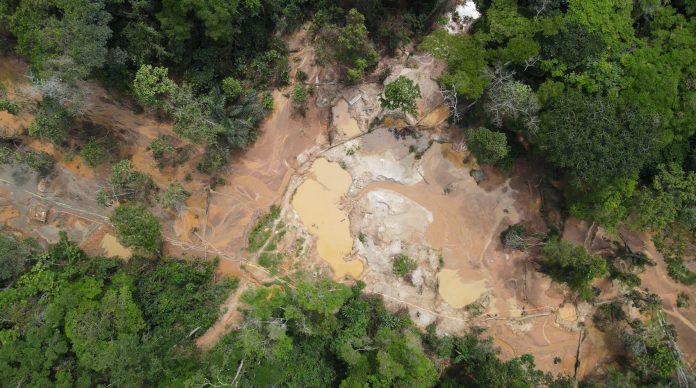
Drone shot of Golden Trip's mine in Kpeteyea
A drone shot of Golden Trip's mine in Kpeteyea, Lofa County.

Top: A drone shot of Golden Trip Group Limited’s abandoned mine in the Kpeteyea town of Salayea District, Lofa County. The DayLight/Samuel Jabba


By T. Prince Mulbah, special for The DayLight


KPETEYEA, Lofa County – One day in May 2020, Chief Anthony Flomo joined townspeople to sign an MoU with a mining company. The five-year deal required Golden Trip Group Limited to pay Kpeteyea—a town in the Gbalin Clan of Salayea District—US$900 monthly, pave a major road with concrete bridges, and provide scholarships.

For the first time, the people of Kpeteyea felt their nightmare of bad roads, a lack of high school graduates and unsafe drinking water was over.

But what Chief Flomo and the townspeople did not know was that Golden Trip had issues. Between the signing and when the community’s realization, Golden Trip had dug several giant-sized pits, polluted watercourses, allegedly owed the community benefits, and evaded a substantial amount of taxes.

“Golden Trip really surprised me, because when they entered Kpeteyea, I thought it was a new day for us…,” said Chief Flomo, sitting under a tree where the Gold Trip MoU was signed.

“We thought the young people of this town were going to get good jobs, our children were going to sit in modern classrooms with safe drinking water,” he added.

Unauthorized mining

Golden Trip was established in April 2018 and is owned by Chein Haibin (75 percent), a Chinese national,  and Randy Scott (25 percent), a Liberian businessperson, according to the company’s articles of incorporation.

compressed MG 8583
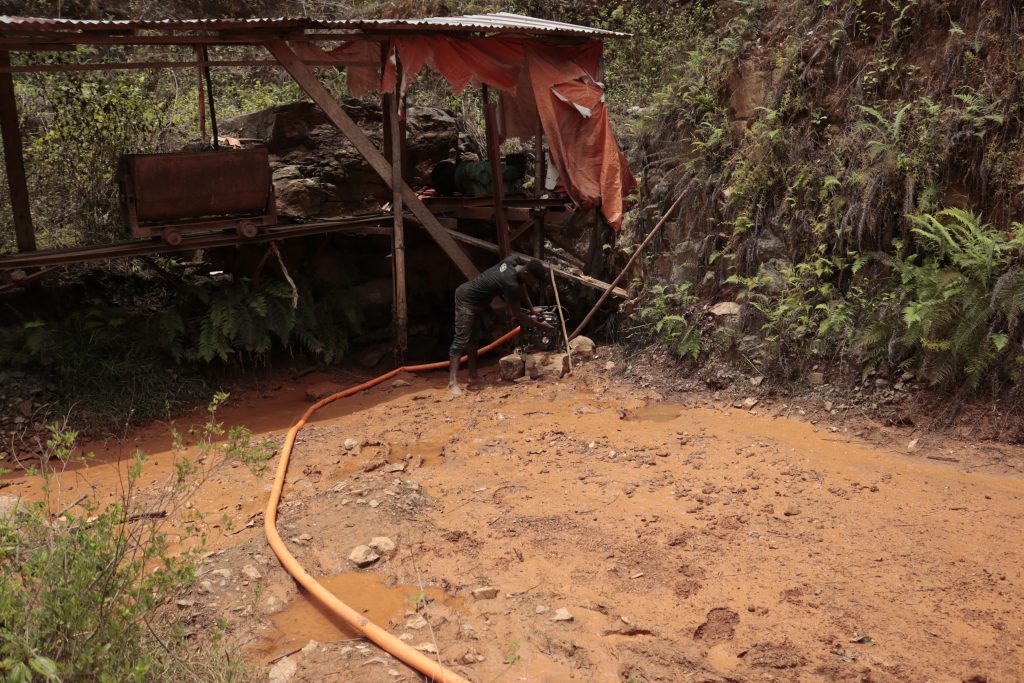
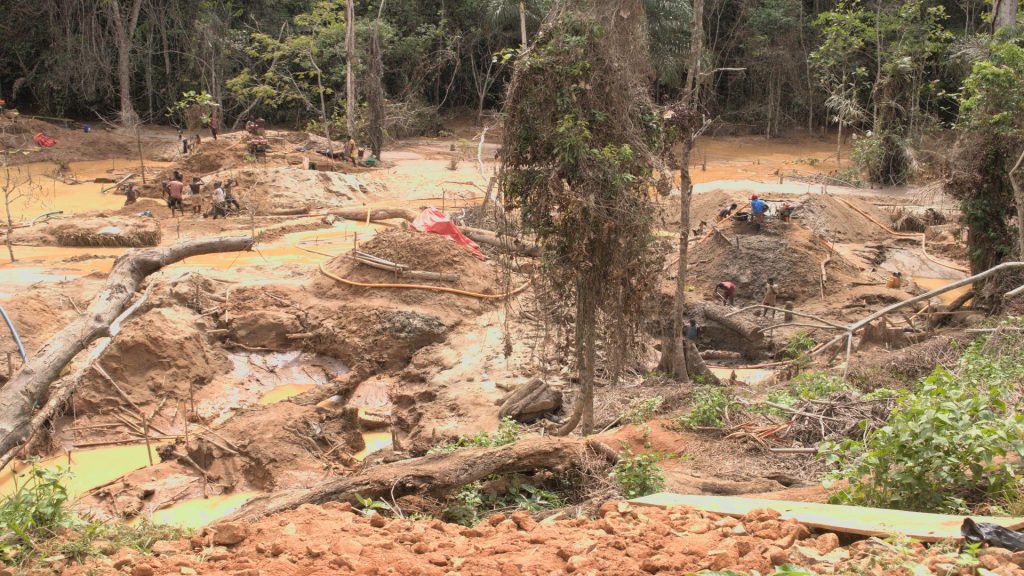
Wildcat miners at Golden Trip’s gold mine in Kpeteyea. Reporters counted over 30 water pump machines at the site. The DayLight/Samuel Jabba

In February 2020, it applied for a class ‘B’ or a medium-scale mining license on 98.3 acres in the Salayea District. Its application was approved three months later. However, the Ministry of Mines placed it under review in 2024 and has remained that way ever since.

Locals only discovered this information when Scott, Golden Trip’s Liberian co-owner, allegedly refused to present its documents. They had become suspicious after several companies claimed the same gold mine as Golden Trip, among other things.

Their suspicion pushed Arthur Quiah, then-Salayea District’s Mining Agent, to investigate. Quiah, a mines ministry representative in the region, established that Golden Trip’s particulars were incomplete and shut down its operations.  

“I closed them because their document had expired and they did not have a current document. Their document was not proper, and the false one that I took from them… expired,” Quiah told the DayLight in a telephone interview. Quiah, who has now been replaced, presented no evidence.

Also, it is unclear whether the Ministry of Mines took any action against Golden Trip for its illegal activities, though operating without a valid mining license violates the Minerals and Mining Law, which carries a fine, a prison term, or both for convicted offenders.

Randy Scott, Golden Trip’s minority shareholder, denies Quiah’s accusation. Scott, questioning Quiah’s employment status with the ministry, said Quiah was unaware of the situation.

“How will he close me down when the Ministry of Mines is still sending me communications?” Scott, who has been linked to several mining companies, quipped. “Arthur Quiah lied.”

Meanwhile, the people of Kpeteyea have seized Golden Trip’s properties until it pays all debts it allegedly owes the community. Golden Trip owes Kpeteyea US$8,100 in monthly dues, two hand pumps, a guesthouse, three bridges, and the renovation of a school building, among others, according to Chief Flomo.

compressed DJI 0159
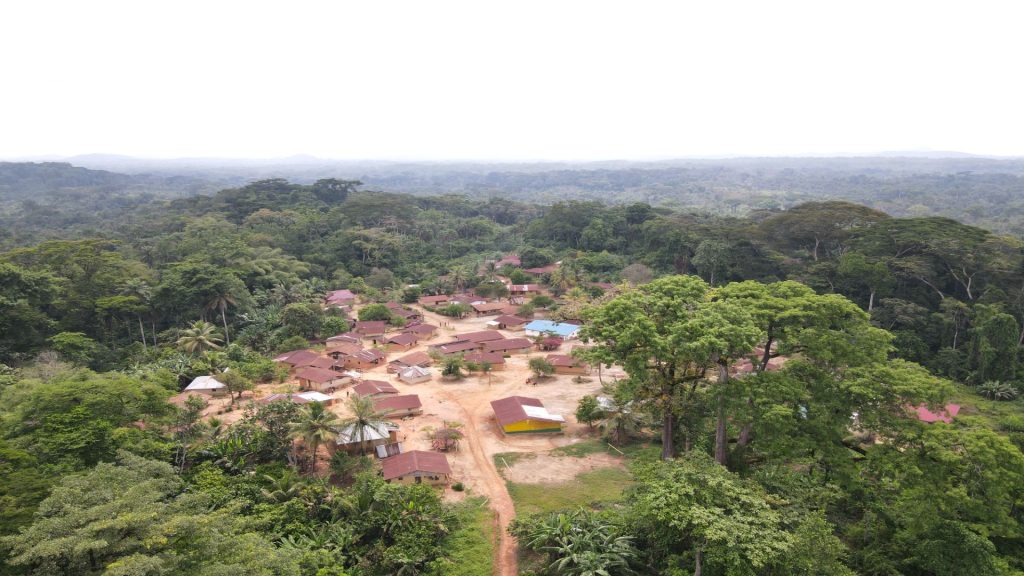
A drone shot of Kpeteyea Town in Salayea District, Lofa County. The DayLight/Samuel Jabba

“I swear these people lied to us, but thank God their materials are still here. If they cannot pay our US$8,100, and implement the projects we agreed on in the MoU, nobody will take any machine from here,” said Chief Flomo.  

Scott denies being indebted to Kpeteyea, dubbing the town’s claim as “nonsense.” He, who had said last year he would resume work this year, now said he had moved from the area.

“Let them take [the equipment],” he told The DayLight in a phone interview. “The government issued the license to different persons; I don’t have [anything] to do over there again.” There is no record of the new company Scott mentioned.

Bogeyman holes

Reporters documented Golden Trip’s mining footprints in Kpeteyea. There were huge, open mining pits locally known as bogeyman holes for being death-traps. There were traces of muddy water running into the Wainda River from mining activities. There was a network of pipes meant to channel water from the rover, which flows into the St. Paul River, and is used by locals for drinking.

Chief Flomo told the DayLight that farmers discovered dead fish floating on the river and the riverbank. It has been polluted with chemicals.

“People were complaining that they had lots of dead fish in the water, but we were really confused about who did the act. Actually, we never discovered what killed the fish, so we advised the citizens not to use the water,” added Flomo. A group of wildcat miners from faraway and near, digging the open pits, confirmed the townspeople’s story.

Scott squashed those claims as a “lazy argument” from the people of Kpeteyea. He claims that the pipes in the river were used to fetch water to his camp.

“Look, mercury? That is a lazy argument. My company was working in the place, and we needed water, which is why you saw pipes in the river. Besides, if fish were dying, then I don’t know why,” added Scott.

The DayLight could not independently verify that claim. However, locals’ descriptions of the alleged pollution are consistent with cyanide poisoning, since mercury kills fish gradually through long-term exposure.

Scott also denies Golden Trip left behind bogeyman holes, a common cause of mine collapses nationwide, including one of the deadliest in River Cess two years ago.

compressed DJI 0165
In 2024, the Ministry of Mines and Energy shut down Golden Trip’s operations, four years after it was awarded. The DayLight/Samuel Jabba

“I never dug in pits. I dug in a mountain,” said Scott. “I never worked on a low ground. You can’t cover the mountain. Who can cover a mountain?  Is a mountain a hole?”

The mining law does not support Scott’s claims. The law requires a company to restore the land or watercourse to its previous state. It does not provide an exception for montane or flat areas.

No work permit

It is unclear how much gold Golden Trip produced, as the Ministry of Commerce and Industry’s records show the company did not export any minerals.

Scott corroborated that information, claiming Golden Trip did not find gold in Kpeteyea. “If I were getting minerals, would I leave from there?” He asked rhetorically.

It was the third reason Scott provided for Golden Trip’s inactivity in Kpeteyea. He had first blamed the local community and later “human errors” on his license.

But the scale of Golden Trip’s operations and the interviews with townspeople tell a different story. Chinese and Liberian workers dug huge pits and piled up gravel in their search for tiny gold nuggets. Four Chinese teams mined the area in Golden Trip’s name. Company executives made frequent trips in the north-western countryside day and night, said Charles Vesselee, a Kpeteyea youth.

“What do you mean? Randy Scott Golden Trip company never took gold from here?” He reacted to The DayLight’s findings. “That’s not true. Then why are trucks and Land Cruiser cars moving day and night? I beg you yaaa! Those guys carried minerals from here,” said Vesselee.

The mystery surrounding Golden Trip’s production is not the only issue. Turns out, none of the 16 foreign workers it brought into Liberia between 2021 and 2023 obtained work permits, according to official records. The Ministry of Labor confirmed this, except for one Zing Wei.

Also, the records establish that the workers obtained a resident permit. However, only four workers’ statuses were renewed. For instance, the residential status of Guangxian Li, a Chinese national who arrived in Liberia at some point, was renewed in 2023 after being skipped in 2022.

 Similarly, the one for Hang Lu, another Chinese, who arrived in 2021, was only renewed in 2023. The Liberia Immigration Service said it did not have a record for any of the 16 workers.  

MG 8564
An illegal miner starts a water pump machine at Golden Trip’s mine in Kpeteyea, Lofa County. The DayLight/Samuel Jabba

The DayLight reviewed Gold Trip’s tax history and found that it failed to renew its license from 2021 until it was shut down in 2024. There was no payment for an environmental permit, a requirement for medium-scale mining.

Based on those findings, Golden Trip evaded tens of thousands of United States dollars in license fees, work, and resident permits, according to official records and fee structures.

The DayLight noted one more irregularity with Golden Trip, though. Official records show that Mr. Chein, the company’s majority shareholder, does not reside or work in Liberia.

Scott confirmed that Mr. Chein did not live or work in Liberia. However, he claims his Chinese business partner is not required to do so.

But that claim is incorrect. The mining law requires that a non-Liberian who holds up to 60 percent shares in a company with a medium-scale license be legally permitted to live and work in Liberia. The license empowers Liberian businesspersons to boost the country’s economy.


This content is produced by The DayLight with support from the Embassy of Ireland through Integrity Watch Liberia. The DayLight maintained editorial independence over its content, which does not reflect the position of the Embassy of Ireland or Integrity Watch Liberia.
Podcasts